Omnis Weekly Update February 6th
Posted by Nigel on Monday 6th of February 2023
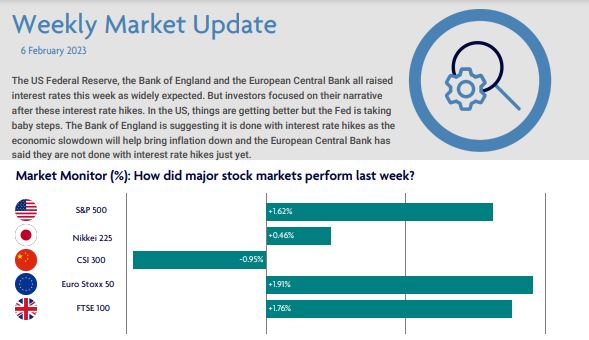
US: The Fed slows down as expected
Whilst Meta platforms released better than expected revenue numbers for the final three months of 2022, investor sentiment was tempered by more disappointing results from Apple, Amazon, and Alphabet. The US Federal Reserve raised interest rates by 0.25% points, which was widely expected, and warned to expect further hikes to keep inflation under control but acknowledged that inflation had eased and that they are seeing encouraging signs that price pressures were easing. This was seen as positive by investo...
Why use a mortgage adviser?
Posted by Nigel on Wednesday 1st of February 2023

Why should I use a mortgage adviser?
Simply put, we have the experience and expertise to help you navigate the 1000s of products available, and feel confident in what is likely to be the biggest purchase you'll ever make.
My bank can help me with my mortgage, and they won’t charge me an advice fee.
Your bank can indeed help you to navigate your way through the mortgage process, helping you select the best fit for you from their own range of products. We, as advisers, source from 1000s of products from a range of lenders, giving you, the ...
Key financial dates and changes for 2023
Posted by Nigel on Monday 30th of January 2023

From tax dates, energy prices, cost of living, rail fares, inflation and interest rates we’ve put together a summary of the key dates and changes in 2023 that could affect your personal finances. We will be regularly updating our blog as more details become available.
January
31st Tax return deadline
Self assessment tax returns for tax year 2021/2022 must be filed AND the first payment made.
March
5th Rail fare rise
This year’s rise has been pushed back from January to March, with fares rising by up to 5.9%
15th Spring Budget
Chance...
Omnis Weekly Update January 30th
Posted by Nigel on Monday 30th of January 2023
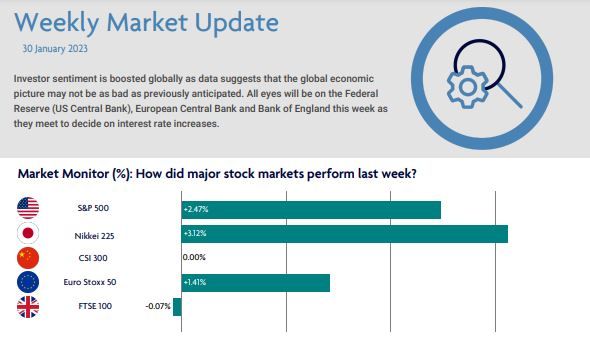
US: Economy appears to be resilient
Data showed that the US economy expanded more than expected in the final three months of 2022 and the manufacturing and services sectors appear to be contracting less than originally anticipated. However, the costs of producing goods and services increased in January, breaking a seven-month streak of falls. Other inflation data suggest that whilst still above the central banks target, inflation appears to be falling. The Federal Reserve is due to raise interest rates again this week.
Japan: US economic...
How your money is protected with The Openwork Partnership
Posted by Nigel on Tuesday 24th of January 2023

Nothing is more important to us than the security of your investments. Although investing does come with some risk, we have processes in place to protect your money, backed by strong regulatory controls and oversight.
The Openwork Partnership launched in 2005 but we’ve been present in the UK for nearly 50 years. Our partnership comprises more than 4,200 financial advisers based in nearly 700 firms across the country, who are supported by 600 people in our central teams. We offer a wide range of financial products and services, including inv...

The Chancellor of the Exchequer Rachel Reeves outlined planned reforms to the welfare system, boosts to investments in economic growth and heightened focus on closing the tax gap.
Amidst growing uncertainty over the conflict in Ukraine and the impacts for European security, alongside rising instability caused by Donald Trump’s tariff war, the Spring Statement 2025 built on the government’s announcements last autumn with a renewed commitment to financial stability.
In laying out the Spring Statement, Rachel Reeves said: ‘the global economy has become more uncertain, bringing insecurity at home as trading patterns become more unstable and borrowing costs rise for many major economies.’
She added that the UK was ‘one of the world's largest economies, an ally to trading partners across the globe and a hub for global innovation. These strengths and the progress that we have made so far mean that we can act quickly and decisively in a more uncertain world to secure Britain's future and to deliver prosperity for working people.’
Reeves' last announcement, made in October 2024, included boosts to minimum wages, an increase in the state pension and a reduction to the headline rate for National Insurance. Now, however, the government has opted for an alternative strategy with major initiatives aimed at courting homeowners and small business owners, among others.
So, ultimately, who wins and loses? Let's explore which groups could be most affected by these changes.
WINNERS
Builders and Property Developers.
The Chancellor made a firm commitment to solving the housing crisis. Changes to the National Planning Policy Framework alone are slated to help build over 1.3m homes in the UK over the next five years.
Education Secretary Bridget Phillipson also pledged more than £600m to train 60,000 construction workers and address widespread skills shortages in the construction sector. This measure and others could benefit home builders, architects, town planners and other associated professions through government aid and streamlined planning permission regulations.
Property Owners.
Reeves’ planning reforms aim to boost house building to a 40-year high and stimulate more activity in the housing market. The Office for Budget Responsibility (OBR) predicts these reforms could permanently increase real GDP by 0.2% in 2029/30, translating to an additional £6.8 billion for the economy.
That kind of economic stability could drive increases in property values and benefit homeowners looking to sell in the next five years.
The Defence Industry.
Defence spending will increase to 2.5% of GDP, putting an extra £6.4bn into the sector by 2027. This uptick will be funded by cuts to the overseas aid budget, bringing it down to 0.3% of GDP.
The Chancellor suggested this would save approximately £2.6bn in day-to-day spending in 2029/30 and help to fund more capital investments. Expect a boost to defence sector growth in the years to come.
Certain Tech Companies.
Technology companies in the defence sector stand to benefit significantly from Reeve’s plans. The Ministry of Defence will spend at least 10% of its equipment budget on cutting-edge technology thanks to a dedicated £400m innovation pot.
Elsewhere, Reeves pledged to up investments into artificial intelligence (AI) to modernise government services and increase efficiencies.
Unemployed Young People.
The Spring Statement also included a clear message that if young people can work, they should be given the opportunity to do so. The Chancellor unveiled a series of measures designed to help get young people into work, including the establishment of 10 new technical excellence colleges across every region of the country and new opportunities for skills development.
LOSERS
Benefits Claimants.
The government plans to reshape the benefits system and focus on getting people into work. The Universal Credit Standard Allowance for a single person aged 25 or over will see a modest increase from £92 to £106 a week by 2029/30.
Offsetting this, however, are planned cuts and freezes to other aspects of Universal Credit. The health element will be frozen for existing claimants until 2029/30. It’ll be reduced to £50 a week for new claimants in 2026/27 and then frozen until 2029/30.
These changes are part of a broader strategy to reduce welfare spending as a share of GDP. The government emphasises that the reforms will make the system more sustainable while pushing more people into employment. However, for many current and potential benefit recipients, this means navigating a more challenging landscape with potentially reduced financial support.
Healthcare Workers.
Reeves reiterated her commitment to dismantle NHS England, stating: ‘the Prime Minister set out plans to abolish the arms-length body NHS England and ensure that money goes directly to improving the service for patients [...] the Health Secretary is driving forward vital reforms to increase NHS productivity, bearing down on costly agency spending to save money so that we can improve patient care.’
Proponents say the decommissioning will remove inefficiencies and unnecessary bureaucracy, but others claim the measures could result in the loss of up to 30,000 jobs.
Civil Service Workers.
The Chancellor outlined significant reforms to reduce the size and cost of the civil service. The government will introduce voluntary exit schemes to allow employees to leave their positions voluntarily, reducing overall staff numbers without mandatory redundancies.
Additionally, the government will invest in AI to increase efficiency and reduce civil service running costs by 15% (amounting to £2bn in savings) by the end of the decade. While Reeves framed these changes as part of a broader strategy to create a leaner state, they could represent a threat to job security for civil service workers.
What’s Next?
The 2025 Spring Statement included several key initiatives to level up Britain's defences, address the housing crisis and crack down on taxation fraud.
The Chancellor appeared confident that these measures combined with agile responses to global instability would drive growth and see the average British household £500 a year better off than this government compared to the last.
It’s clear that appetite for economic and policy reform is strong on the Labour frontbenches. These changes combined with the raft of measures announced last October are shifting the way many people approach their finances.
Feel free to get in touch if you have any concerns about the impact of these changes on your situation or if you want to explore the opportunities they might create.
The value of investments and any income from them can fall as well as rise and you may not get back the original amount invested.
HM Revenue and Customs practice and the law relating to taxation are complex and subject to individual circumstances and changes which cannot be foreseen.
Approved by The Openwork Partnership on 26/03/2025